
- Key Takeaways
- Why Proper Lubrication Oil is Crucial
- Selecting Your Cone Crusher Lubrication Oil
- The Unsung Hero: The Lubrication System
- Best Practices for Oil Monitoring
- Decoding Oil Analysis Reports
- Troubleshooting Common Lubrication Issues
- Conclusion
- Frequently Asked Questions
- What type of lubrication oil is best for a cone crusher?
- How often should cone crusher lubrication oil be changed?
- What are the signs of lubrication oil problems in a cone crusher?
- Why is oil analysis important for cone crusher reliability?
- What causes lubrication oil contamination in cone crushers?
- How can I improve my cone crusher lubrication system performance?
- What should I do if cone crusher oil temperature or pressure is abnormal?
Key Takeaways
- The right lubrication oil is the cornerstone of cone crusher reliability as it minimizes friction, dissipates heat, inhibits corrosion, carries away contaminants, and dampens shock. All of these factors maximize component life and reduce unplanned downtime. When lubrication is insufficient, metal-to-metal contact, heat, and wear quickly lead to expensive breakdowns and urgent fixes.
- Choosing the right lubrication oil involves paying close attention to viscosity grade, additive package, and base oil type so that the lubricant can cope with real load, temperature, and contamination conditions. By revisiting OEM guidelines and matching oil properties to duty cycle, feed material, and climate, operators can steer clear of premature wear and frequent oil changes.
- A good lubrication system, designed and maintained properly, is the silent backbone of cone crusher performance because it guarantees constant, stable oil flow and pressure to all vital spots. Servicing pumps, filters, coolers, valves, and sensors ensures consistent lubrication delivery and keeps the system poised for normal and extreme conditions.
- Systematic oil monitoring — temperature and pressure readings as well as hole visual inspections — helps to identify lubrication problems before they can harm bearings and gears. Create the habit of logging data, setting alarms, and training staff in standardized inspections for predictive maintenance and long-term reliability.
- Regular oil analysis gives your maintenance team quantitative insight into contaminant levels, oil condition, and wear debris so they can make data-driven decisions about oil change intervals and component inspections. Monitoring trends over time and adjusting contamination control and lubrication strategies allows operators to avoid failures instead of just responding to them.
- Common lubrication issues of high temperature, low pressure, foaming, and darkened oil are eliminated through structured troubleshooting steps that keep cone crushers in stable, efficient operation. Keeping a log of issues, root causes, and corrective actions allows lubrication practices to be continually improved and total operating cost minimized.
===
Cone crusher lubrication oil is the oil that lubricates, cools and washes away wear debris within the crusher’s drive and bearing system. For most plants, the oil selection and condition impact liner life, bearing wear, energy consumption, and unplanned downtime.
To establish a foundation, the following sections step through oil varieties, crucial specifications such as viscosity, typical failure modes, and quick inspections that maintain the system steady and secure.
Why Proper Lubrication Oil is Crucial
Lubrication oil in a cone crusher isn’t a sideline. It’s what holds the machine steady, smooth, and reliable under hard load. When the oil is clean, of the right viscosity, and maintained within the right temperature and pressure window, it reduces wear, conserves energy, and postpones costly rebuilds. When it’s wrong or dirty, friction and heat climb quickly, and breaks move from ‘scheduled service’ to ‘disastrous halt.’
1. Reduces Friction
A cone crusher has many loaded contact points: main shaft, eccentric, thrust bearings, pinion, and gear. All of them require a constant oil film so surfaces slide not grind. The lube system has to feed oil into these zones at steady pressure or the film breaks, metal touches metal, and you observe scoring and pitting in a very short amount of time.
Film thickness is dependent upon oil flow and viscosity. If the oil is too thin for the load, the film collapses at peak pressure. If it is too thick for the ambient temperature, it will not flow well at start-up and starves the bearings. Most plants pick a viscosity grade based on climate: higher viscosity for hot regions, lower viscosity for cold starts, and then fine-tune based on OEM charts and field wear patterns.
Dirty lube oil is one of the quickest ways to increase friction in a rock crusher because grit converts the oil film into a cutting paste. Over time, that increases bearing clearances, which further compromises the oil film and exacerbates vibration. Routine oil sampling and rudimentary checks of color, smell, and particles help detect this trend early before friction losses express themselves as elevated power draw and abbreviated liner life.
2. Dissipates Heat
Crushing creates a lot of heat at the eccentric and bearing surfaces and the oil circuit is the primary channel to move that heat out to coolers or heat exchangers. To do that well, the system needs to keep flow steady and oil temperature within a controlled band, usually around 49–71 °C (120–160 °F), where the oil is thin enough to flow but still thick enough to protect.
If the oil runs hotter than this range, viscosity drops, the film thins, and you get a loop of more friction and even more heat. If it runs too cold, the oil is sluggish, and certain zones experience subpar flow at start-up, which again encourages localized heating and wearing. That’s why temperature sensors, relief valves, and cooler performance checks aren’t optional ‘extras’ but key controls for crusher uptime and motor efficiency.
3. Prevents Corrosion
Within a cone crusher, moisture that sneaks in through seals, breathers or subpar storage can initiate slow rust on bearing races, gears and housing surfaces. A quality lubrication oil has corrosion inhibitors that create a thin barrier film on steel, so even if water does manage to sneak in, it does not immediately attack metal.
Corrosion risk increases when the oil is stale, oxidized, or chemically degraded. Acidic by-products accumulate and the inhibitors weaken. Periodic oil changes at intervals associated with hours, load factor, and lab analysis keep the chemistry in a safe zone. When teams skip changes, surfaces pit from micro-corrosion and those pits become stress risers that accelerate fatigue cracks.
Water in the oil presents as cloudiness, foam, or in lab reports, high water content and TAN. Catching these markers early and flushing the system saves bearings and gear sets that would otherwise require full replacement after a season of silent internal corrosion.
4. Removes Contaminants
All cone crushers generate fine dust and some of that dust will attempt to infiltrate the lube system via breathers, seals or during service. Without high-quality filtration, that dust remains in circulation and acts like a fine abrasive between moving parts. Filters, return screens and clean air breathers all work to catch these particles before they enter critical clearances.
Filter check and change-out schedules are just as critical as oil change intervals. A choked filter goes into bypass, which delivers unfiltered oil directly to bearings and gears. Field teams who monitor pressure drop across filters and inspect elements during shutdowns minimize this threat and lengthen overhaul spans.
Oil sampling is a hands-on diagnostic tool. By pulling samples at regular intervals and submitting them for particle counts, wear metals, and contamination indicators, you get early warning of seal leaks, ingress from wash-down water, or internal wear. Armed with that information, you can schedule oil changes and system cleaning before the crusher exhibits hard faults.
5. Dampens Shock
Cone crushers experience shock loads any time uncrushable material passes or feed is inconsistent. A properly designed lubrication oil with good film strength and extreme pressure additives assists in distributing those load spikes across the contact surface rather than allowing them to concentrate on a limited asperity population. That decreases spalling on bearing races and tooth flanks.
Proper oil level in the tank and internal galleries matters for shock damping. Low oil level allows air into the circuit, aerating the oil, causing it to foam and lose cushioning ability. Frequent checks of level, foam, and pump suction conditions maintain film stability under rapidly changing loads.
When plants use the appropriate viscosity grade tailored to both climate and crusher design, they experience a reduced power draw for the same throughput. Less friction and better shock handling translate into less lost energy as heat and vibration and more of the motor power making the actual rock reduction, which is the essence of efficient operation.
Selecting Your Cone Crusher Lubrication Oil
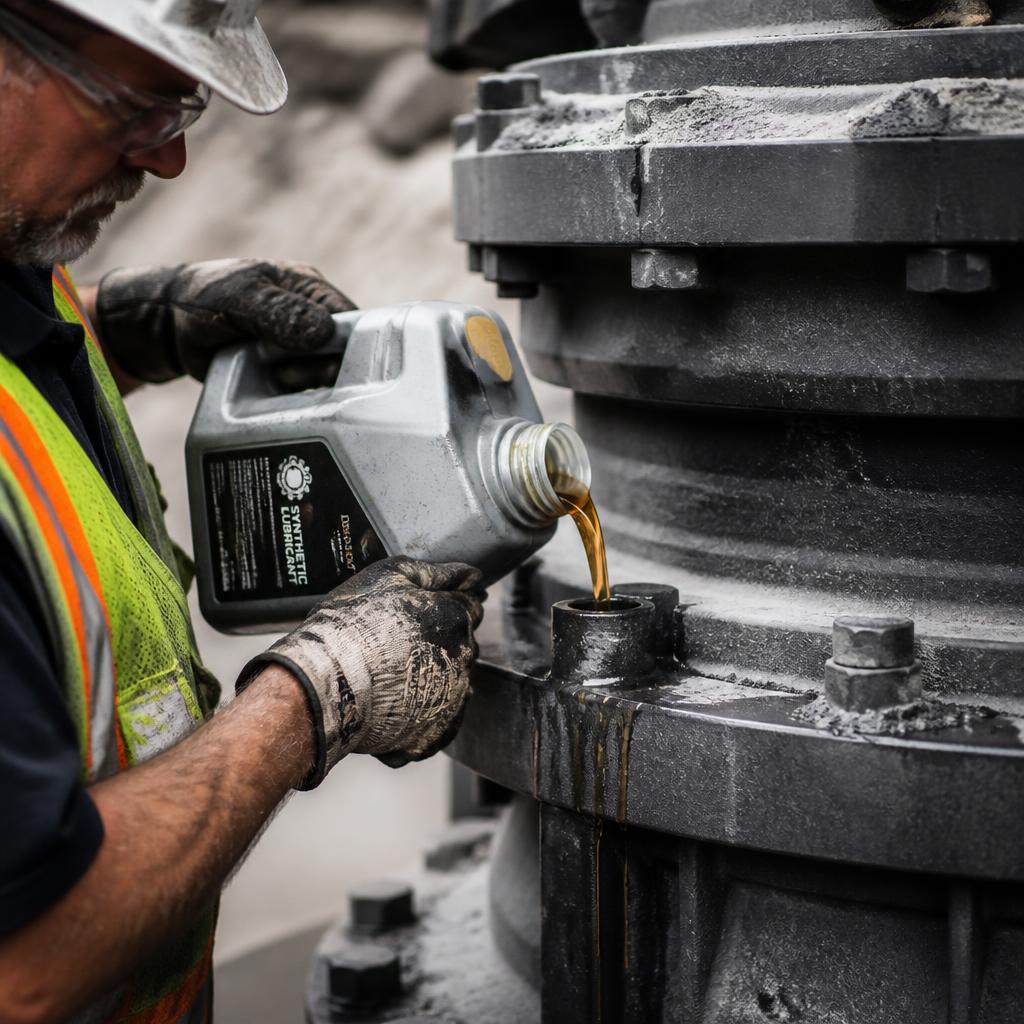
Lubrication oil lies at the heart of cone crusher wellness. The wrong oil grade or chemistry doesn’t just fail on paper; it manifests itself in hot running, scoring on bushings, short liner life and unplanned shutdowns. The lubrication system is key, and its set-up, oil selection and cleanliness drive the machine’s performance, efficiency and service life much more than many new engineers anticipate.
Viscosity Grade
Begin with the manufacturer’s viscosity chart, not guesswork or a “one-oil-for-everything” attitude. OEM guidelines associate ISO viscosity grade with both ambient temperature and typical operating oil temperature in the return line, so you choose an oil that is thin enough to pump at start-up but thick enough to maintain film strength on the thrust bearings and babbitted sleeve type bearings under load.
In other designs, cooled, clean oil from an external conditioning system feeds those sleeves. If the viscosity is off, you get either boundary wear or sluggish flow and high temperature alarms. Heavy-duty crushing of hard, abrasive ore at high power draw typically requires higher viscosity grades such as ISO VG 150 to 220 to maintain a film under load.
Cold climates or repeated cold starts might force you down to a lower grade, like ISO VG 68 to 100, to prevent cavitation and low-flow trips. Viscosity still needs to fall within the OEM window at operating temperature, not just at the drum. Line oil temperature is your feedback loop.
Watch it during warm-up and full load to ensure your in-service viscosity remains in range. If temperature creeps up and stays there even with a clean cooler, the oil may be thick for your duty cycle or you’re running beyond the design envelope.
Additive Package
In cone crushers, the additive package is as important as the base viscosity. You need a formulation with heavy-duty anti-wear and extreme-pressure chemistry to protect your gears, thrust surfaces, and bushings, along with oxidation resistance for those long, hot runs.
Corrosion inhibitors and sludge control count because moisture and fine dust combine to create sticky deposits in the tank, galleries, and adjusting pump passages if the oil doesn’t keep them in check. Detergents and dispersants keep fine contaminants suspended, so the filters can remove them instead of having them cake on cool surfaces.
This works only if maintenance keeps up. Oil tank return screens should be inspected daily or at least every eight hours, and filters should be changed on schedule or sooner when differential pressure rises. Additive compatibility with seal materials, paint and existing oil should always be verified.
Mixing unknown chemistries can result in foaming, seal swell or loss of EP performance.
Base Oil Type
Base oil type connects your lubrication decision to the operational setting and environmental regulations of the location. Mineral oils remain prevalent at standard duty, moderate-temperature plants with short oil change intervals and straightforward supply chains.
Synthetic oils, typically polyalphaolefin (PAO) based, enter the scene when you operate at extreme temperatures, require viscosity stability across long shifts, or target extended drain intervals to reduce downtime. Under severe loads, a base oil of higher viscosity prior to adding additives enhances film strength and may lessen metal-to-metal contact on heavily loaded gears and bearings.
Base oil purity and refining method influence cleanliness and oxidation stability. Highly refined or synthetic stocks produce less sludge and maintain their properties longer, enabling longer maintenance intervals if you couple them with routine oil analysis.
In sensitive areas, they can require biodegradable base oils, but you still need to match their viscosity and additive system to OEM limits and verify that performance in lab and field tests, not just marketing sheets.
Operating Conditions
Choose your cone crusher lube based on how the crusher really operates, not how it appears in a brochure. High load factors, long duty cycles, and hot, dusty climates require robust EP packages, good demulsibility, and often a step up in viscosity grade.
Short, intermittent shifts in mild climates can permit a mid-range mineral oil. If abrasive dust or process fines enter the lubrication circuit, seek oils that have good contaminant handling characteristics and base your plan on regular oil sampling, aggressive filtration, and rigorous cleanliness goals.
Moisture, be it from wash‑down water or humid air, drives you to oils with excellent rust protection and rapid water separation so that free water can be drained from the tank during scheduled inspections. Crushers exposed to heavy vibration or shock loading, such as in mobile plants or hard rock quarries, profit from oils with good film strength and foam control.
Stable lubrication helps the system maintain pressure and flow even as mechanical shocks propagate through the frame. While certain cone crushers allow you to run the lubrication system with the machine operating, the feed must be stopped prior to running the adjusting pump, or you risk substandard lubrication, precisely when loads fluctuate.
|
Operating condition |
Typical lubricant focus |
|---|---|
|
Hot climate, high load, hard ore |
Higher ISO grade, strong EP, synthetic or premium mineral |
|
Cold climate, frequent starts |
Lower ISO grade, good pumpability, possible synthetic |
|
High dust, abrasive fines |
Detergent/dispersant, strong filtration, frequent checks |
|
High moisture exposure |
Strong rust inhibitors, good demulsibility |
The Unsung Hero: The Lubrication System
In a cone crusher, the unsung hero is its lubrication system, which keeps oil flowing at just the right rate, pressure and temperature so that every bearing, gear and sliding surface is protected, even when under heavy load. It has to deliver clean oil to all points, pull heat out through circulation and cooling, and do this hour after hour without gaps.
When this system fails or runs on old, dirty oil, wear goes at warp speed, because there’s only one thing that will wear out the inside of a rock crusher, and that is dirty lube oil. Routine inspections, filter replacements and oil sampling catch problems before they become big, while intelligent monitoring and automated lubrication maintain constant flow, minimize human error and provide real-time information on oil quality and temperature.
System Design
A cone crusher has multiple lubrication points distributed across a dense frame, so the system design must be capable of managing intricate oil routing without depriving any part. Engineers size the reservoir to maintain sufficient oil volume for cooling and to prevent air entrainment, then route supply and return lines to the head, eccentric, step bearing, thrust bearing, and gear zones with separation between pressure and gravity circuits.
Heat exchangers and other coolers maintain return oil temperature in a narrow band, with the best return oil temperatures typically between 100°F and 130°F (38°C to 54°C) so viscosity stays constant and film thickness remains dependable. Designers will often incorporate redundant pumping mechanisms or a remote reservoir to maintain oil supply during maintenance or brief outages.
This is very handy in remote mines where downtime impacts production goals, contract penalties and downstream plant schedules. Thermal bypass valves direct cold oil around the cooler until it heats up, then push it through the heat exchanger once it can dissipate heat effectively. This lessens thermal shock, shortens warm-up time and minimizes the risk of running thick, sluggish oil through tight clearances at start-up.
Manifolds and pipelines must be sized for the expected flow and pressure drop, with conservative margins for oil aging and filter loading. Under-sized lines raise pressure, mask filter blockage, and still leave far points under-lubricated.
Key Components
A standard cone crusher lubrication circuit consists of a main lube oil pump, gear pump, filters, coolers, pressure gauges and air breather, oil tank, in addition to sensors monitoring the level, temperature and differential pressure. Each piece has a clear role: the pump generates flow, filters pull out particles, coolers manage temperature, gauges and sensors give fast feedback when something drifts from normal, and the breather protects the tank from dust while the oil level goes up and down.
While air breathers and tank return screens are small, they play a big role in contamination management. With regular maintenance, such as checking air breathers weekly and oil tank return screens daily, it reduces dust ingress and detects early signs of wear or seal failure.
This is important because contaminating lubricants is one of the biggest environmental and mechanical issues. Running an oil-lubricated crusher with contaminated oil is an all too common error that fuels both component failures and oil disposal volume. Bearing surfaces—step bearing, thrust bearing—require clean, well-distributed oil films.
Technicians inspect these sites for scoring, discoloration, or uneven oil patterns suggesting clogged passages. Checking the health of gear pumps, oil channels, and the entire lubrication circuit for leaks or pressure loss prevents covert starvation and complements lubricant recycling and reconditioning programs that can extend oil life by as much as 40 percent, reducing material costs and waste.
Flow and Pressure
Flow and pressure are the lubrication system’s primary health indicators, and both must be monitored continually if the crusher operates with variable feed and closed-side settings. Pressure sensors and gauges near the pump and at the manifold register abnormal drops that may indicate leaks, clogged filters, or low reservoir level, while sharp spikes can indicate closed valves or line blockage damaging seals.
Operators typically log normal lube oil pressure and micro oil flow rate as a baseline and then compare live readings to this profile during inspections and after parameter changes. Flow rates typically require fine tuning when the crusher runs with higher power draw, harder feed or a different lubricant grade.
Automatic systems assist by adjusting delivery and sending alarms when actual values go outside set limits.
Best Practices for Oil Monitoring
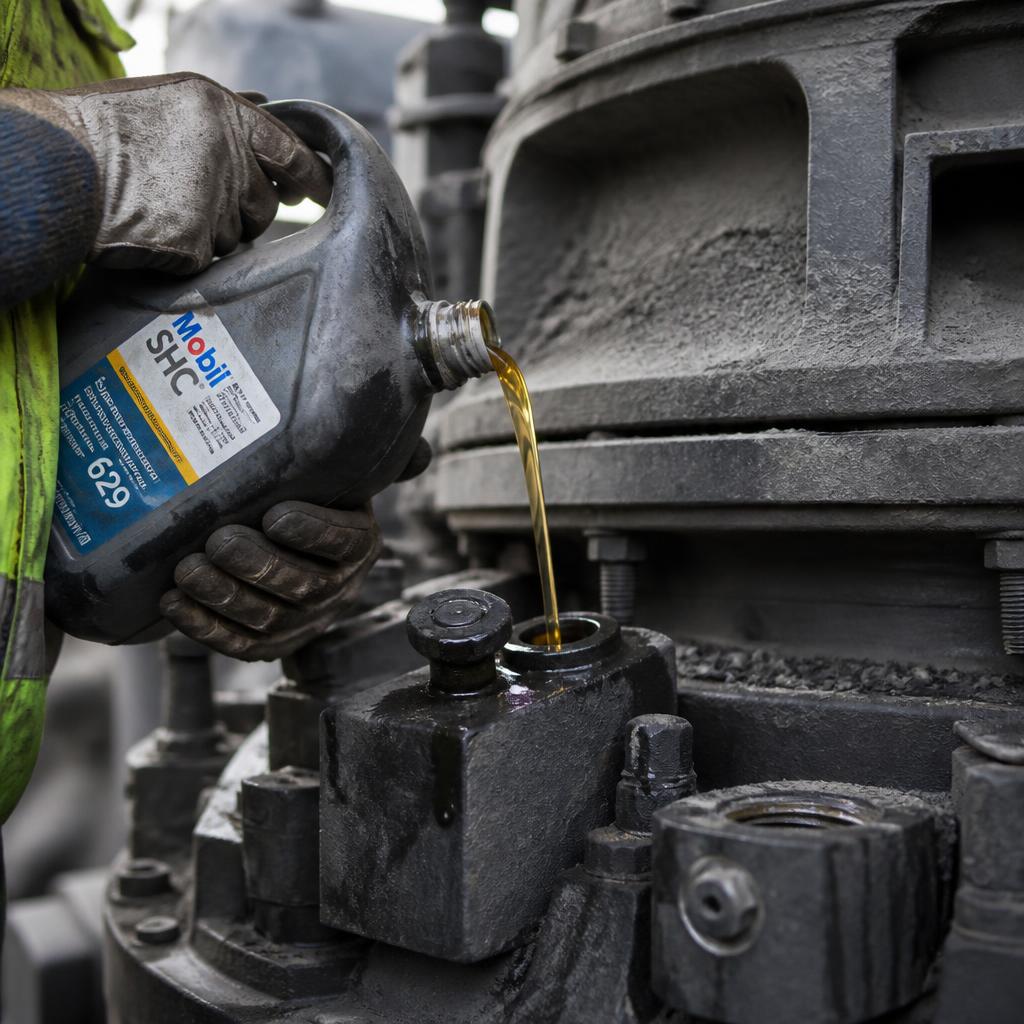
Good oil monitoring on cone crushers involves monitoring temperature, pressure, and oil condition in a routine monitoring program and then using the data to act when necessary rather than waiting for failures. For those readers familiar with data work, imagine this as creating a time-series dataset on the lubrication system and linking maintenance to the trends, not to guesswork.
Establish sampling intervals for most crushers, which is every 500 hours. Record temperature, pressure, and sampling data results in a single common system. Set clear alarm limits for moisture, viscosity, and temperature. Employ the same sampling points, tools, and procedures consistently. Standardize oil labeling and dispensing to avoid cross‑contamination. Include advanced oil monitoring on critical units or large sumps greater than 950 liters.
Temperature Checks
Oil temperature control in a cone crusher is about maintaining the film strength high enough to protect bearings while avoiding thermal degradation of the base oil and additives. Monitor supply and return oil temperature so you can observe how much heat the crusher is transferring into the oil circuit. A steady differential under steady load indicates the cooler, pump, and flow paths are all performing.
Most OEMs provide a target band around 38–54°C (100–130°F) and operating outside that range for extended periods is a red flag, not a footnote. Monitor line temperature at the lube skid and at the return from the crusher head, and set alarms for both maximum temperature and abnormal change in differential, not just absolute values.
For cold starts, warm the oil to at least 16°C (60°F) before loading the crusher. Running heavy mineral oil below that point causes viscosity to increase, flow to slow, and critical surfaces to be starved in the first minutes of operation. Record all temperature readings in your maintenance database so you can develop trend charts and link spikes to incidents such as blocked coolers, fan failures, or feed hardness changes, which is the basis for true predictive maintenance.
Pressure Readings
Pressure readings indicate if the lubrication circuit is indeed supplying the necessary flow to the bearings, so lube oil pressure and hydraulic pressure should be checked at regular intervals during every shift and any time the operating conditions change. Best Practices for Oil Monitoring: Calibrated gauges or digital transmitters at key points in the circuit, such as the pump outlet and immediately after filters, can confirm you have enough pressure, rather than just checking one convenient tap.
Look into low pressure immediately, as even brief instances of lube pressure can result in bearing scoring and reduced head and eccentric life. Typical culprits are clogged filters, worn pumps, air leaks on the suction side, or oil that has thickened out of spec. Look for slow pressure decay in the logs, too, which tends to indicate pump wear or filter loading well ahead of a low-pressure alarm, and use this trend as a signal for planned shutdown rather than waiting for a trip.
Visual Inspections
Visual checks are the fastest way to catch oil problems between lab samples, and they work best when you employ a repeatable checklist rather than just a quick glance. Start with oil in the sight glass or sample bottle: look at color, clarity, and any foam. Dark, opaque oil or stable foam usually points to oxidation, contamination, or air entrainment that will hurt film strength.
Verify reservoir level and ensure that air breathers, return strainers, and inline filters are clean and properly fitted, as clogged or missing breathers enable moisture and dust to enter the system. Next, scan the crusher base, piping, and lube tank for leaks, sludge, or dirty buildups that indicate chronic seepage or bad housekeeping. These spots often correlate later with abnormal wear metals in oil reports.
Because moisture drives rust and additive depletion, tie your visual checks to measured water content. Set an abnormal alarm at 0.05% and a critical alarm at 0.10%. For small systems under about 57 L (15 gallons), consider an offline filtration cart with water-adsorbing media to pull water down from the 0.3–2.0% range. Pair these field checks with lab data on viscosity and flag any shift from specification that is greater than ±10%.
Additive elements up to 25% is normal drift, but more than that often indicates mixing or wrong top-up oil. Once you standardize oil IDs and proper dispensing gear, you should rarely see additive swings above ±25% or viscosity shifts above ±10% unless the oil itself is failing. Finally, for high-value crushers or those with large oil volumes above about 950 liters (250 gallons), add an advanced monitoring program with more frequent sampling and online sensors, so you can tie visual findings to continuous data and act before you lose a bearing set.
Decoding Oil Analysis Reports
Cone crusher lubrication oil analysis turns lab data into crystal signals about lubricant health, internal wear and the time to take action. It’s best as a long-term program, where you read trends rather than chase single ‘bad’ numbers.
Contaminant Levels
Foreign matter in cone crusher oil typically originates from dust entry, water leaks or rough handling. Lab reports indicate these through particle count, water content usually in percent or parts per million, and occasionally ISO cleanliness codes. A high particle count or visible dirt frequently corresponds directly to bad sealing, damaged breathers or contaminated top-ups.
You establish threshold limits based on crusher type, duty cycle and environment. A unit in a dry, dusty quarry requires more stringent particle limits than one in a cleaner, controlled plant. Over time, you use your own history to establish what’s ‘normal’ and then report any spike in particle count, water, or sludge as a caution.
Particle count changes often correlate with bearing or gear issues. If contaminants breach your safety limits, the action is not just an emergency oil change, but an inspection of seals, breathers, filters and fill points. By avoiding the root cause, the new oil will wash out just as fast.
When analysis shows recurring dirt or water, you tighten contamination control: finer filters, better breather design, stricter storage, or more frequent checks during rainy seasons.
Oil Condition
Oil condition informs you if the lubricant can continue to safeguard the crusher. Important lab values here are viscosity at 40 °C or 100 °C, total acid number (TAN), oxidation, and occasionally nitration. When viscosity drifts too high, the oil can run thick and starve tight clearances. If it falls, you lose film strength and increase metal-to-metal contact.
If there’s any quick jump in TAN or oxidation, it signals thermal stress, extended drain intervals or inadequate cooling. You look at each result against past samples from the same crusher. This trend analysis is much more valuable than a one-off report because it indicates if the oil is gradually breaking down or suddenly giving out after a process shift.
If it begins to thicken, sludge or there are sharp jumps in TAN or viscosity, you schedule a controlled change-out and then examine lubricant selection, change interval and operating temperature. Switching to a different base oil or additive package makes more sense given the crusher’s load profile and ambient climate.
Wear Debris
Wear debris analysis connects what’s drifting in the oil to what’s going on inside the machine. Reports typically provide a metals count of iron, copper, lead, and others in mg/kg, often termed ppm. Each metal hints at a source: iron often ties to gears and shafts, copper to bushings, and lead to certain bearing materials. Normal levels are design and duty dependent, so you build baselines for each crusher and then track deviations from that line.
Size and type are just as important as amount. An increase in smaller particles can indicate early wear, whereas spikes and larger particles can indicate active damage or misalignment. Wear metals shifts commonly accompany shifts in viscosity, TAN, or particle count, which allows you to isolate the fault to a bearing set, gear mesh, or lubrication path.
When abnormal wear debris appears, you narrow sampling intervals and add physical inspections, like vibration checks or endoscopic views where feasible. You record each data set with operating hours, load, product type and recent repairs because that multidisciplinary context, design, conditions and history, is what transforms raw numbers into trusted decisions that minimize downtime and maximize crusher life.
- Changes in viscosity, TAN or particle count indicate oil stress or contamination.
- Elevated wear metals such as iron, copper, and lead suggest that particular parts are wearing.
- Oil analysis stable trends over many samples mean you and the crusher are in control.
- Frequent sampling and transparent limits enable extended oil drains and fewer unexpected findings.
Troubleshooting Common Lubrication Issues
Cone crusher uptime is frequently determined by how quickly you can identify and address lubrication issues. Daily checks, weekly reviews, and the deeper inspections done at liner changes or at least annually help you monitor trends, not just individual occurrences.
A good habit to get into is to have a numbered troubleshooting checklist and a shared log so that every tech on shift can see what has already been checked and what changed since the last inspection.
-
Monitor oil temperature, pressure, and level at the beginning, middle, and end of shifts.
-
Answer low pressure or high temperature alarms immediately, not at the next break.
-
Common lube issues and how to troubleshoot them.
-
Write down every problem, root cause, repair, and oil sample result in a shared log.
-
Consult that log once a month to adjust service intervals and training subjects.
High Temperature
High oil temperature is a warning sign for the lubricant as well as the machine. Cone crushers typically run best when oil temperature remains between 49°C and 71°C. Beyond 82°C, the oil thins, film strength decreases, and metal contact increases rapidly.
The first step is to check the basics: oil level in the tank, condition of the cooler, and that cooling water or air flow is not blocked by scale, dirt, or dust. High bearing clearances or misaligned shafts can convert normal load into excess heat, so check vibration and noise trends when temperature lifts.
Next, verify that the pump is indeed pumping oil at the correct flow rate. Don’t just trust that it’s ‘on’, verify flow through sight glasses or flow meters and check that suction strainers aren’t choked. Dirty or oxidized oil has weaker heat-carrying ability, so when the oil looks dark or smells burnt, send a sample to the lab and plan a flush.
If temperature increases during peak load only, back off the feed or crusher settings and observe if temperature stabilizes. If it does not, you’re probably covering up a deeper mechanical problem.
Low Pressure
Low oil pressure is one of the few alarms you never disregard. Generally, most systems will remain in the 10 to 30 psi range and any sustained fall toward the bottom limit requires an immediate halt and inspection.
Begin by checking for leaks at hoses, flanges, and around the tank. Then, pull and inspect filters for clogging or collapse. If pressure remains low with clean filters, check the oil grade and temperature.
Such oil, if too thin or already hot, will not build pressure, especially at start-up. Wear on the pump shaft, damaged seals or air sucked in on the suction side all reduce effective pressure and can manifest as a noisy, cavitating pump. Return to normal pressure prior to releasing the crusher back to production, or bearing life will plummet even if the machine is “okay” for now.
Foaming Oil
Foaming indicates air in the oil circuit, which dilutes lubrication and renders level readings difficult. Typical culprits are air leaks on the suction side, an oil tank filled above the designed level so the return line splashes into the oil, or a crusher duty product without the correct anti-foam additives.
As soon as foaming appears, drain the worst of the oil, clean the tank and refill with the proper ISO VG 150 or VG 220 oil to the crusher builder’s specification. Make sure the air breather on your tank is clean and sized properly so the tank can breathe without sucking in dust or moisture.
Darkened Oil
Dark oil generally indicates that heat, dirt, or wear metals have been in the system for too long. When you notice consistent darkening, consider it an indicator that thermal breakdown or contamination is in progress, rather than a typical ‘aging’ stage.
Troubleshooting common lubrication issues involves pulling a sample and sending it for analysis to look for silica, metal particles, oxidation, and loss of additives. Schedule an oil change immediately, and if the sample verifies contamination, completely flush and clean the reservoir, lines, and coolers prior to installing new oil.
A lot of sites do quarterly full changes and 500-hour sample checks so problems appear on reports well before they appear as failures. If new oil darkens quickly again, look upstream. Failing seals, poor breathers, or weak filtration often sit at the root of the problem.
Conclusion
Cone crusher oil sounds simple, but it powers the entire machine. Well-picked oil and handling reduce heat, wear, and hazard. Bad oil makes minor imperfections into major overhauls quickly.
You observed how oil type, clean flow, and consistent checks all align. Each part has clear signs: noise, heat, smell, color, and metal in samples. None of that is accidental. The oil spins a yarn every turn.
So, if you want to keep a unit sharp, stay close to that story. Log temps. Run track samples. Poke holes in minor adjustments. Post data with your team. If a piece of advice from this guide strikes your plant, try it on one crusher and see the trend. Then adjust, scale, and construct your own playbook.
Frequently Asked Questions
What type of lubrication oil is best for a cone crusher?
Use a premium quality, anti-wear mineral or synthetic gear or hydraulic oil with the viscosity grade recommended by the crusher manufacturer. The appropriate viscosity safeguards bearings and gears, minimizes wear, and regulates operating temperature. OEM (original equipment manufacturer) specifications should always be followed.
How often should cone crusher lubrication oil be changed?
Change intervals vary according to operating hours, dust level, and oil analysis. Many plants change oil every 1,000 to 2,000 hours, but this is only a rule of thumb. Regular oil sampling and analysis will help you set the right change interval for your conditions.
What are the signs of lubrication oil problems in a cone crusher?
Typical red flags are rising oil temperature, low oil pressure alarm, metal particles in filters, milky or foamy oil, and unusual noise from the crusher. Any of these problems should prompt an immediate check of the lubrication and oil.
Why is oil analysis important for cone crusher reliability?
Oil analysis detects wear metals, contamination, and viscosity changes prior to failures. It assists you in identifying bearing, gear, and seal issues early. This enables scheduled maintenance, reduces unscheduled downtime, and prolongs component and oil life, increasing overall crusher reliability and cost management.
What causes lubrication oil contamination in cone crushers?
Common culprits include dust exposure via compromised seals, water contamination via washing or rain, improper oil change procedures, and substandard breather filters. Overfilled sumps and open filling ports likewise elevate contamination risk. Good sealing, filtration, and handling.
How can I improve my cone crusher lubrication system performance?
Keep proper oil level and viscosity, clean coolers and filters, and check pump flow and pressure. Check seals, hoses, and breathers regularly. Use scheduled oil sampling and analysis to customize change intervals and catch problems early. Adhere to the manufacturer’s maintenance procedures.
What should I do if cone crusher oil temperature or pressure is abnormal?
Turn the crusher off and see before turning it on again. Inspect the oil level, cooler, filter, and pump. Check for leaks, clogged lines, or broken thermostats. Don’t operate the machine until the root cause is identified and resolved to prevent catastrophic component damage.